
DZ47-125 · SurRon Light Bee, Talaria MX3 / MX4
Handles 20 to 25 kW of peak power. SurRon & Talaria circuit breaker guide
Protect the power you unlocked.
Every electric motorcycle needs a working circuit breaker or fuse on the main battery line. Here is the practical way to choose one for a TORP-powered SurRon or Talaria.
- Keep the BMS connected
- Match the pack voltage
- Never bypass protection
Recommended protection01
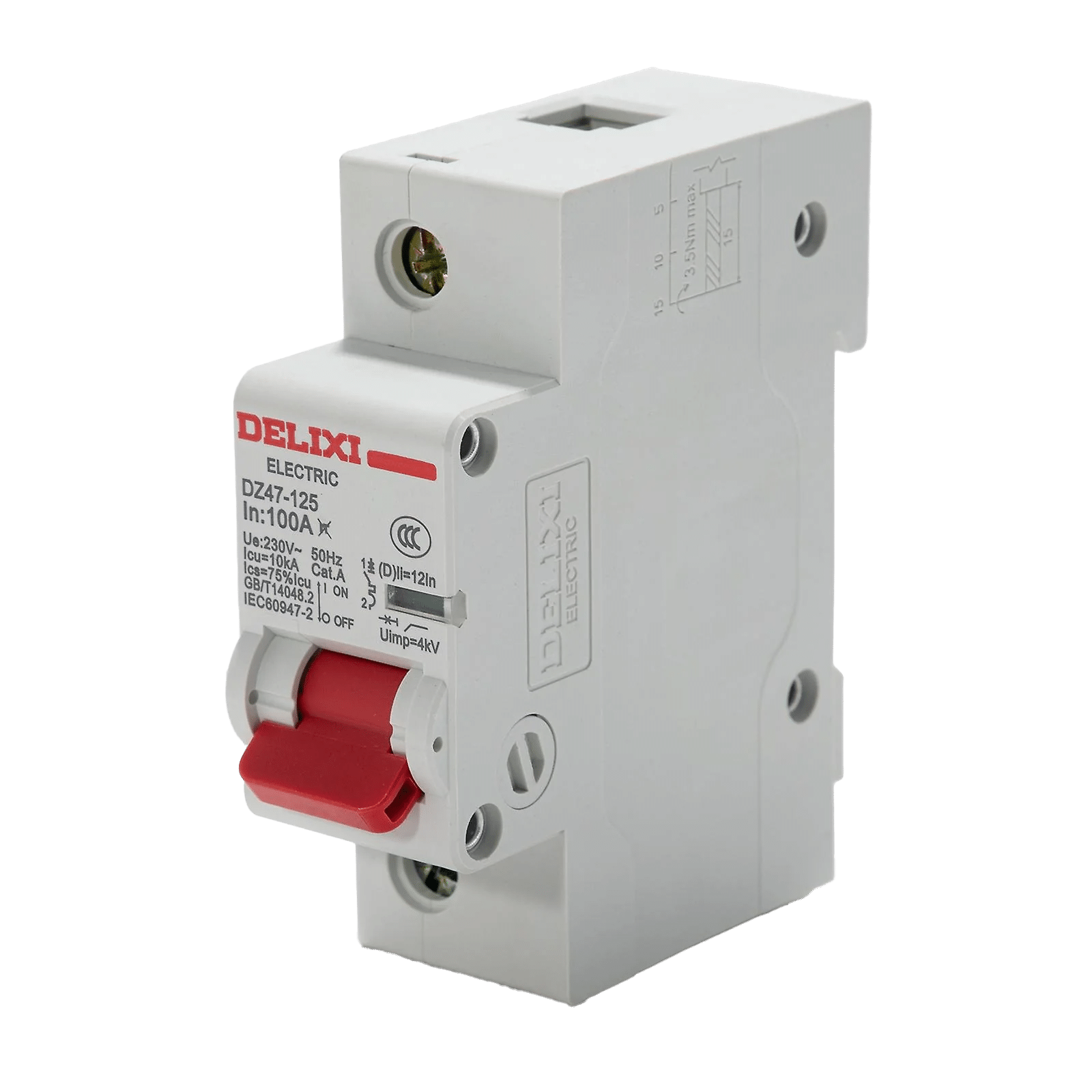
Battery ProtectedController
Safety requirement
Never remove the breaker or fuse
Running the main battery line without working protection, or bypassing it, can damage your bike and property and voids the 2-year warranty on TORP products. These are general safety guidelines; consult a qualified professional for a custom setup.
Start here
Three setups. One clear decision.
Keep the strongest protection your power level can use reliably.
Keep the stock breaker
DZ47-125 · 100 AThe stock SurRon Light Bee, Talaria MX3 and MX4 breaker handles 100 A continuously and roughly 20 to 25 kW peak power.
Move to a 125 A breaker
DZ47-125 · 125 AThis is the first step when the stock breaker nuisance-trips during longer high-power runs. It keeps thermal and magnetic protection.
Use a correctly rated fuse
150–250 A · pack voltageIf the 125 A breaker still trips, or the bike runs sustained high power, switch to a fuse selected from its time-current chart and rated for the full pack voltage.
Circuit breaker or fuse?
Both will protect your system. A circuit breaker protects in two ways rather than one, and it does not need replacing after it trips.
Preferred
Circuit breaker
- Thermal protection, for prolonged overload
- Magnetic protection, reacts instantly to a short circuit
- Reset it and ride on
Fuse
- Thermal protection only
- No magnetic protection
- Has to be replaced every time it blows
Breaker ratings
Continuous rating is not the trip point.
Electric bikes pull their biggest current in short bursts. A correctly rated breaker is designed to tolerate those bursts without giving up short-circuit protection.
Stock breaker trip curveDZ47-125
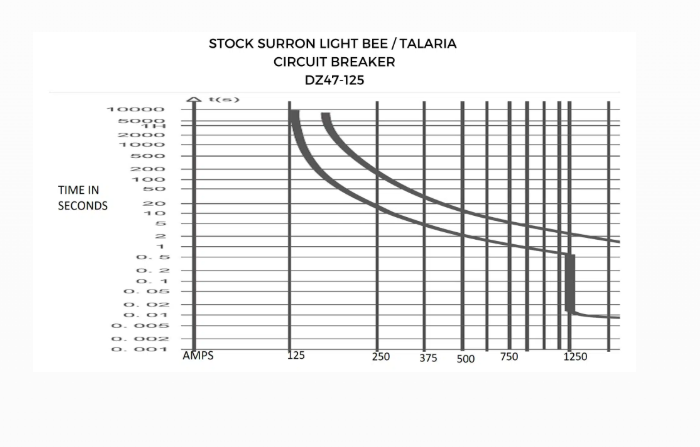
A 100 A continuous rating does not mean the breaker trips at 100 A. The curve shows how it tolerates short bursts before opening; exact trip time varies with current and conditions.
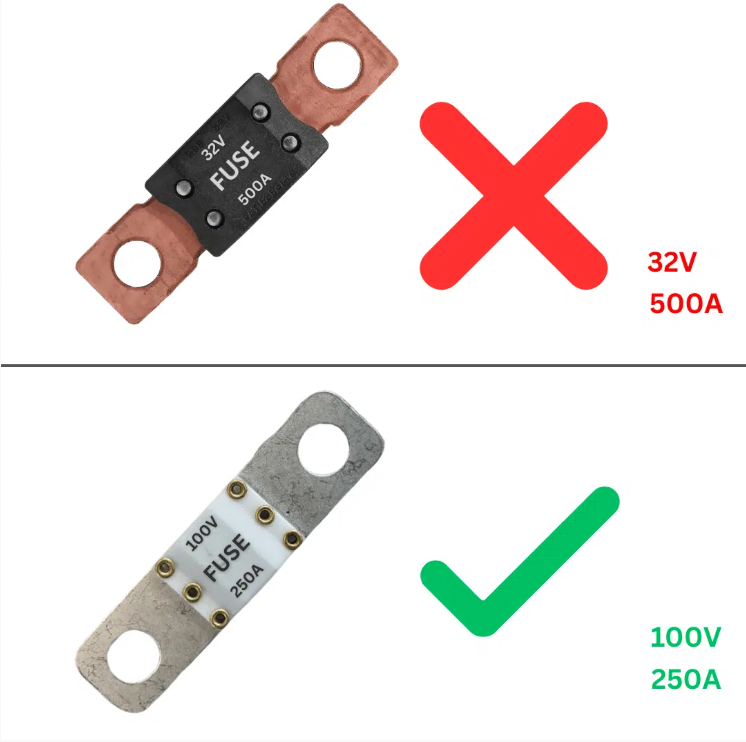
Choosing a fuse
If your bike uses so much sustained power that even a 125 A continuous circuit breaker cannot handle it, replace the breaker with a correctly rated fuse.
- Use a fuse rated for at least the full battery-pack voltage. A 12 to 36 V fuse is not suitable and may not protect the system during a short circuit.
- Use peak battery current as an input, but do not copy it directly as the fuse rating.
- Consult the fuse manufacturer's time-current chart, then select within the recommended 150 to 250 A range.
Example
A 500 A peak battery current does not call for a 500 A fuse. That rating is too high to provide useful protection and is effectively the same as running without a fuse.
Wiring layout
Protection has to interrupt the circuit.
The battery's positive cable must pass through the breaker or fuse before it reaches the controller. A second direct cable around it defeats the protection.
Correct
Protection in series
All positive current has to travel through the protection device.
Incorrect
Unprotected current path
Removing the device—or leaving a direct path around it—gives current a route with no protection.
Always follow the wiring diagram for your exact bike and kit. These simplified schematics explain the protection principle; they do not replace the installation manual.
What your bike already has
Every stock e-bike ships with protection. Know which kind yours uses before you change anything.
SurRon Light Bee
BMS overcurrent protection + circuit breaker
SurRon Ultra Bee
BMS protection + fuse built into the stock battery
Talaria MX3 / MX4
BMS overcurrent protection + circuit breaker
Talaria MX5
BMS protection + fuse built into the stock battery. TORP kits also include an external fuse for aftermarket battery packs without an internal fuse.
Two things riders mistake for protection
A pre-charge circuit is not protection
TORP controllers do not need one. Resistor versions, and QS8 connectors with a pre-charge circuit built in, exist to stop the connector sparking when you plug it in. That is a completely different purpose, and it is not a replacement for a fuse or circuit breaker.
Bypassing the BMS is not an upgrade
Bypassing the stock battery loses crucial protection mechanisms, and it does not substantially increase power. Keep the BMS in the circuit.
If you upgrade your wiring
Upgrading the wiring gauge or fitting QS8 connectors does not remove the need for protection. Reinstall the circuit breaker exactly as it was originally configured.
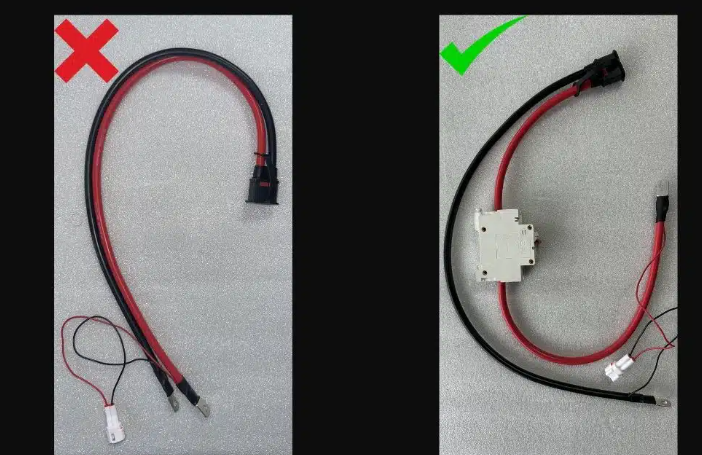
Even when upgrading or modifying your bike, having a properly rated fuse or circuit breaker, along with a non-bypassed BMS, is essential to ensure the reliable and safe operation of the entire system.